
Consistency Beyond Contrast: Enhancing Open-Vocabulary Object Detection Robustness via Contextual Consistency Learning
arXiv cs.CV / 3/30/2026
💬 OpinionIdeas & Deep AnalysisModels & Research
Key Points
- The paper argues that open-vocabulary object detection methods often improve cross-modal alignment (language–vision) but overlook within-modality consistency when backgrounds or environments change.
- It proposes Contextual Consistency Learning (CCL), combining Contextual Bootstrapped Data Generation (CBDG) to synthesize data with consistent objects across varied backgrounds and Contextual Consistency Loss (CCLoss) to enforce feature invariance under environmental variation.
- The framework targets a robustness gap where models may fail to recognize the same object identity across different scenes due to inconsistent contextual cues.
- Experiments report state-of-the-art gains, improving by +16.3 AP on OmniLabel and +14.9 AP on D3 compared with prior approaches.
- The authors release public code for CCL, enabling other researchers to reproduce and extend the approach.
Related Articles
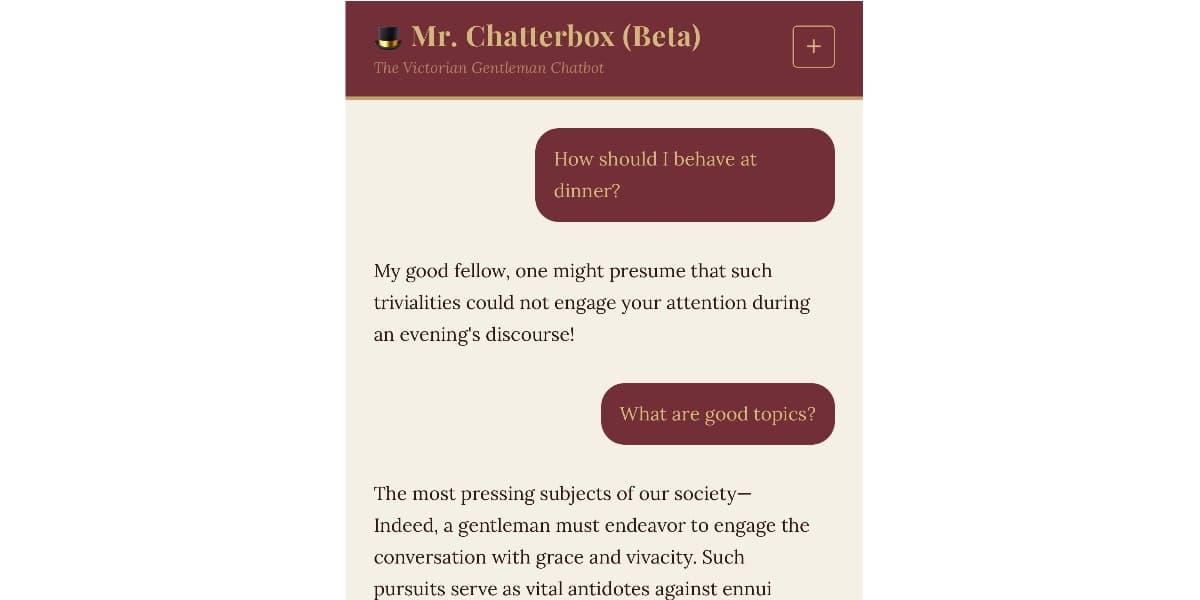
Mr. Chatterbox is a (weak) Victorian-era ethically trained model you can run on your own computer
Simon Willison's Blog
Beyond the Chatbot: Engineering Multi-Agent Ecosystems in 2026
Dev.to

I missed the "fun" part in software development
Dev.to

The Billion Dollar Tax on AI Agents
Dev.to

Hermes Agent: A Self-Improving AI Agent That Runs Anywhere
Dev.to


