
From Prototype to Classroom: An Intelligent Tutoring System for Quantum Education
arXiv cs.AI / 4/29/2026
💬 OpinionDeveloper Stack & InfrastructureIdeas & Deep AnalysisTools & Practical UsageModels & Research
Key Points
- The paper introduces ITAS, a multi-agent intelligent tutoring system aimed at improving quantum information science (QIS) education for instructors and students facing conceptual and mathematical complexity.
- Building on a prior knowledge-graph-based prototype, the authors evaluate whether stronger specialization of LLM agents can improve reliability for real quantum education tasks under student load.
- ITAS is built around a five-module QIS curriculum (grounded in Watrous’s information-first framework) and a “Spoke-and-Wheel” teaching architecture using quantum-specialized teaching and lesson-planning agents.
- A production-oriented cloud infrastructure with regulatory-compliance considerations enables classroom-scale concurrency at costs described as below “textbook” levels.
- In a pilot at Old Dominion University, the deployed system reportedly provides instructors actionable insights via a conversational analytics layer, including surfacing curriculum gaps not easily identified otherwise.
Related Articles

Black Hat USA
AI Business
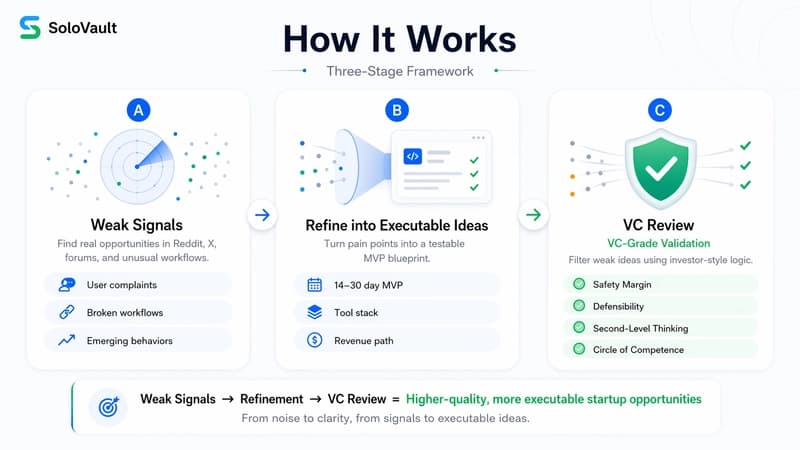
What to Build Still Beats How
Dev.to

I Build Systems, Flip Land, and Drop Trap Music — Meet Tyler Moncrieff aka Father Dust
Dev.to
From Claim Denials to Smart Decisions: My Experience Using AI in Healthcare Claims Processing
Dev.to
Whatsapp AI booking system in one prompt in 5 minutes
Dev.to


