
Toward Culturally Grounded Natural Language Processing
arXiv cs.CL / 3/30/2026
💬 OpinionSignals & Early TrendsIdeas & Deep AnalysisModels & Research
Key Points
- The paper argues that multilingual NLP progress does not automatically imply cultural competence, noting that multilingual capability and cultural understanding can diverge.
- It synthesizes 50+ papers (2020–2026) showing that performance inequality across languages is driven not only by training data coverage but also by factors like tokenization, prompt language, translated benchmark design, culturally specific supervision, and multimodal context.
- It highlights multiple benchmark and dataset efforts and critiques (e.g., Global-MMLU, CDEval, WorldValuesBench, CulturalBench, CULEMO, CulturalVQA) that demonstrate strong models can still flatten local norms or misread culturally grounded cues.
- The authors call for moving beyond treating languages as separate benchmark rows toward modeling “communicative ecologies,” including institutions, scripts, translation pipelines, domains, modalities, and communities.
- The article proposes a culturally grounded NLP research agenda emphasizing richer contextual metadata, culturally stratified evaluation, participatory alignment, within-language variation, and multimodal, community-aware design.
Related Articles

Black Hat Asia
AI Business
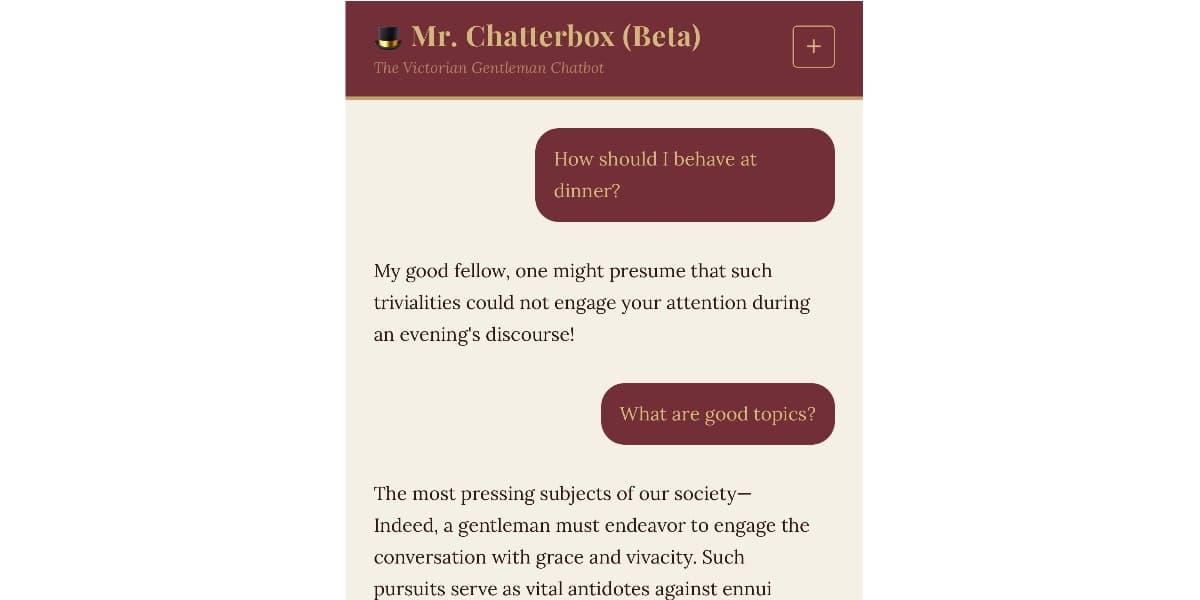
Mr. Chatterbox is a (weak) Victorian-era ethically trained model you can run on your own computer
Simon Willison's Blog
Beyond the Chatbot: Engineering Multi-Agent Ecosystems in 2026
Dev.to

I missed the "fun" part in software development
Dev.to

The Billion Dollar Tax on AI Agents
Dev.to


