
From Pixels to Privacy: Temporally Consistent Video Anonymization via Token Pruning for Privacy Preserving Action Recognition
arXiv cs.CV / 3/30/2026
📰 NewsSignals & Early TrendsIdeas & Deep AnalysisModels & Research
Key Points
- The paper proposes an attention-driven spatiotemporal video anonymization method that targets privacy leakage from modern large-scale video models that can encode sensitive attributes (e.g., facial identity, race, gender).
- It uses a Vision Transformer backbone with two classification tokens—an action CLS token and a privacy CLS token—to disentangle action-relevant features from privacy-sensitive content.
- By contrasting attention distributions for these tokens, the method computes a utility–privacy score per spatiotemporal tubelet and prunes tubelets dominated by privacy cues via top-k selection.
- Experiments report that action recognition accuracy remains comparable to training on raw videos while significantly reducing privacy leakage, suggesting the approach is effective for privacy-preserving video analytics.
Related Articles

Black Hat Asia
AI Business
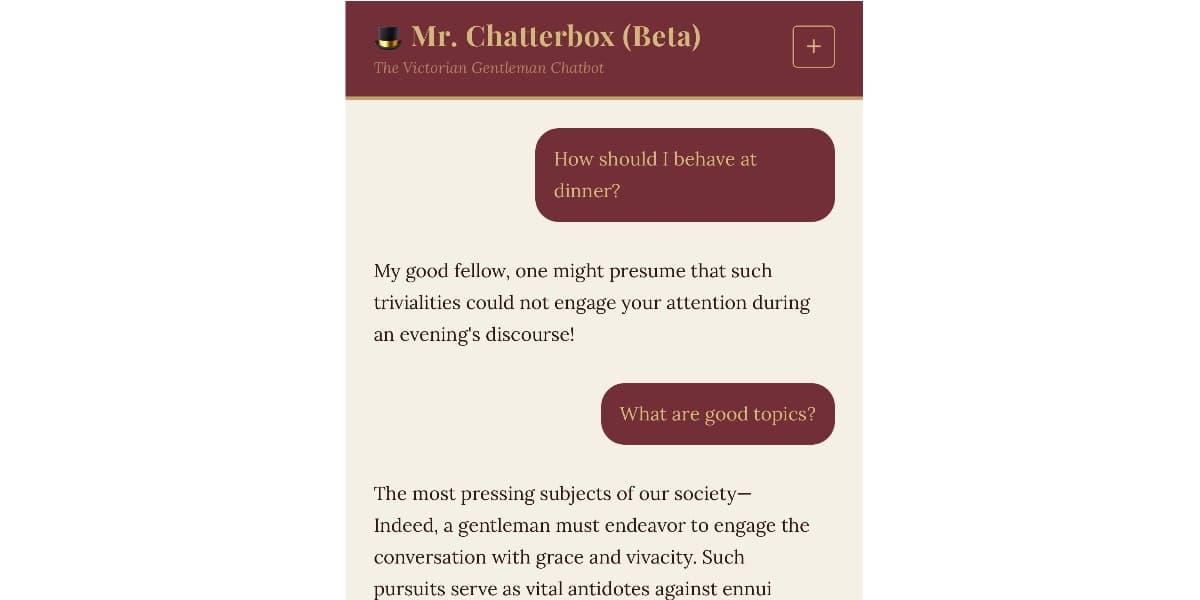
Mr. Chatterbox is a (weak) Victorian-era ethically trained model you can run on your own computer
Simon Willison's Blog
Beyond the Chatbot: Engineering Multi-Agent Ecosystems in 2026
Dev.to

I missed the "fun" part in software development
Dev.to

The Billion Dollar Tax on AI Agents
Dev.to


