
CD-Buffer: Complementary Dual-Buffer Framework for Test-Time Adaptation in Adverse Weather Object Detection
arXiv cs.LG / 3/30/2026
💬 OpinionIdeas & Deep AnalysisModels & Research
Key Points
- The paper addresses Test-Time Adaptation (TTA) for object detection under adverse weather, focusing on how to handle domain shifts without offline retraining.
- It finds that existing TTA approaches are complementary: subtractive methods (removing domain-sensitive/corrupted channels) work best under severe shifts, while additive methods (lightweight feature refinement) work best under moderate shifts.
- The proposed CD-Buffer framework adaptively balances subtractive and additive mechanisms using a unified discrepancy metric computed at the feature level.
- By coupling “removal” and “refinement” through this discrepancy-driven coordination, CD-Buffer performs automatic channel-wise balancing without manual tuning across heterogeneous corruption severities.
- Experiments on KITTI, Cityscapes, and ACDC report state-of-the-art performance across multiple weather conditions and corruption levels.
💡 Insights using this article
This article is featured in our daily AI news digest — key takeaways and action items at a glance.
Related Articles
Freedom and Constraints of Autonomous Agents — Self-Modification, Trust Boundaries, and Emergent Gameplay
Dev.to
The Prompt Tax: Why Every AI Feature Costs More Than You Think
Dev.to
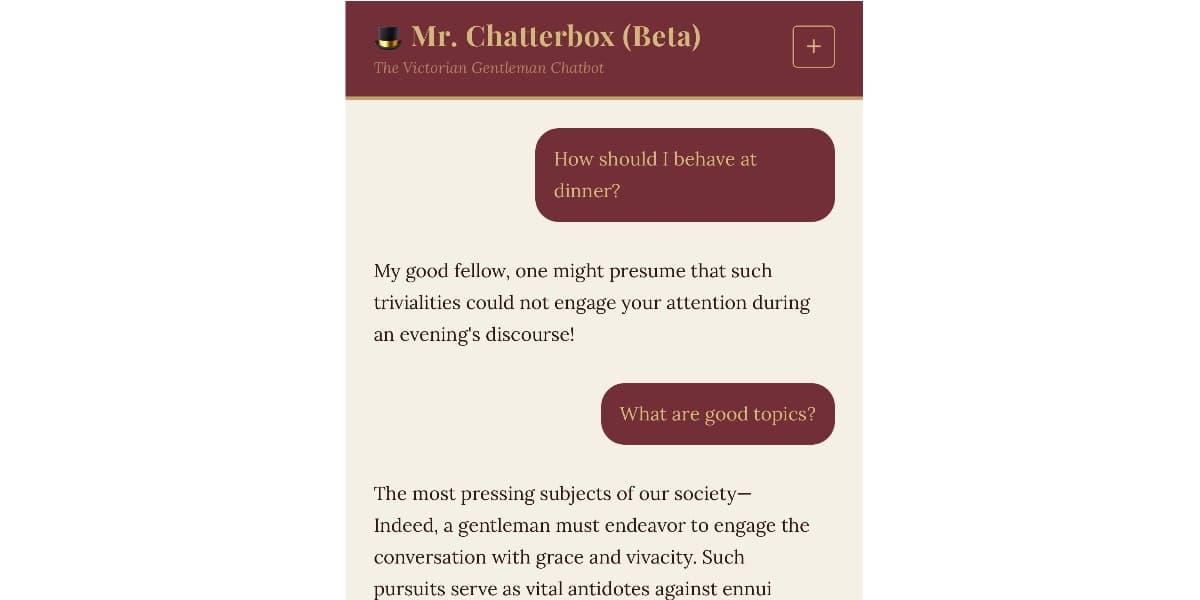
Mr. Chatterbox is a (weak) Victorian-era ethically trained model you can run on your own computer
Simon Willison's Blog
Beyond the Chatbot: Engineering Multi-Agent Ecosystems in 2026
Dev.to

I missed the "fun" part in software development
Dev.to


