
Gaussian Shannon: High-Precision Diffusion Model Watermarking Based on Communication
arXiv cs.CV / 3/30/2026
💬 OpinionIdeas & Deep AnalysisTools & Practical UsageModels & Research
Key Points
- The paper introduces “Gaussian Shannon,” a diffusion-model watermarking framework that models the diffusion process as a noisy communication channel to enable both robust tracing and exact bit-level recovery of embedded watermark payloads.
- Unlike threshold-based detectors that only allow fuzzy matching, the method embeds watermarks directly into the initial Gaussian noise and aims to recover structured metadata in a bit-exact, lossless way for use cases like licensing instructions.
- It analyzes interference as local bit flips and global stochastic distortions, then applies a cascaded defense using error-correcting codes plus majority voting for reliable end-to-end payload transmission.
- Experiments on multiple Stable Diffusion variants and diverse perturbations report state-of-the-art bit accuracy and high true positive rates while maintaining image quality without fine-tuning.
- The authors provide an open-source implementation via the linked GitHub repository.
Related Articles

Black Hat Asia
AI Business
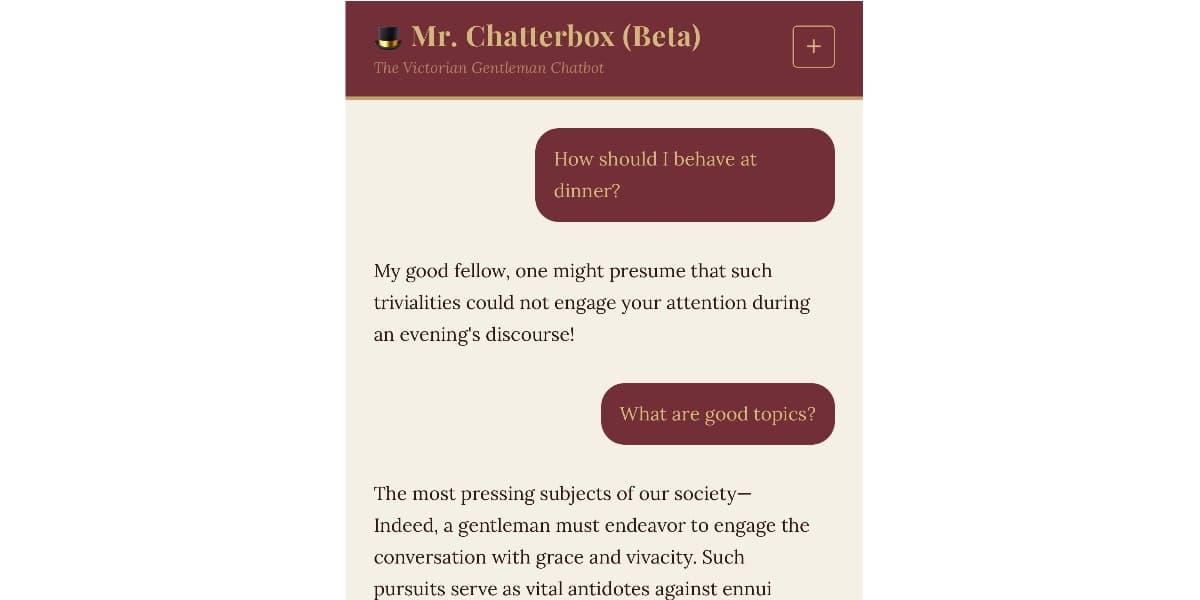
Mr. Chatterbox is a (weak) Victorian-era ethically trained model you can run on your own computer
Simon Willison's Blog
Beyond the Chatbot: Engineering Multi-Agent Ecosystems in 2026
Dev.to

I missed the "fun" part in software development
Dev.to

The Billion Dollar Tax on AI Agents
Dev.to


