
Toward Efficient and Robust Behavior Models for Multi-Agent Driving Simulation
arXiv cs.RO / 3/30/2026
💬 OpinionIdeas & Deep AnalysisModels & Research
Key Points
- The paper proposes a more efficient and robust multi-agent driving behavior model by optimizing how individual traffic participants are represented and encoded for simulation.
- It introduces an instance-centric scene representation using local coordinate frames for each participant and map element, enabling viewpoint-invariant encoding and reuse of static map tokens across simulation steps.
- For interaction modeling, it uses a query-centric symmetric context encoder with relative positional encodings to capture relationships between local frames.
- The behavior model is learned via Adversarial Inverse Reinforcement Learning, with an adaptive reward transformation that automatically trades off robustness versus realism during training.
- Experimental results indicate improved scaling with the number of tokens and better positional accuracy/robustness than multiple agent-centric baselines, alongside reduced training and inference time.
Related Articles
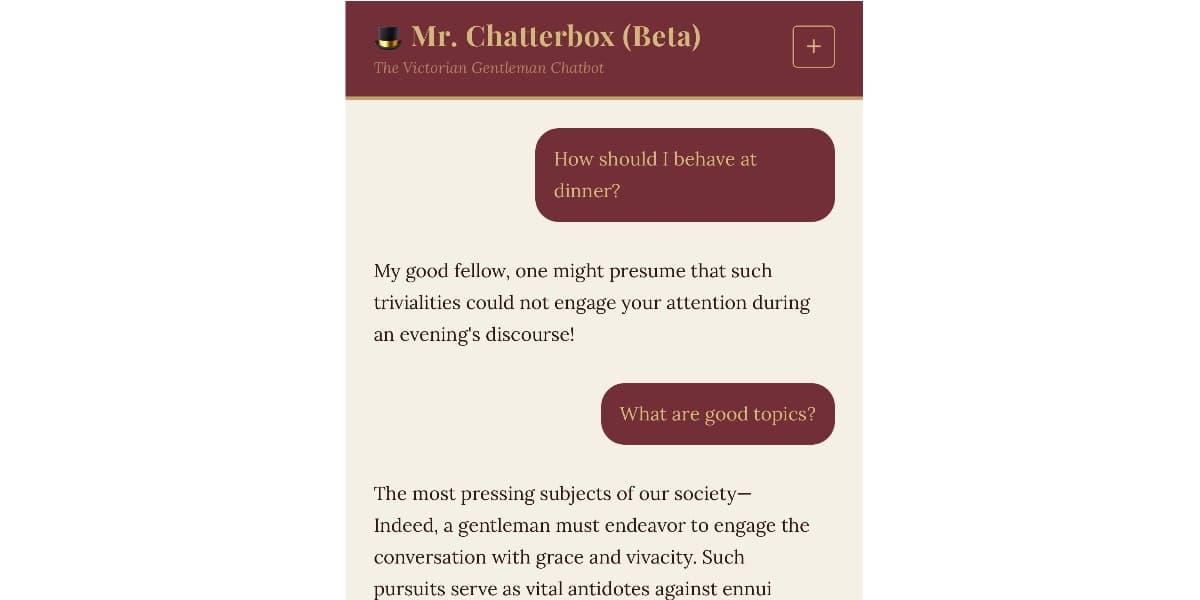
Mr. Chatterbox is a (weak) Victorian-era ethically trained model you can run on your own computer
Simon Willison's Blog
Beyond the Chatbot: Engineering Multi-Agent Ecosystems in 2026
Dev.to

I missed the "fun" part in software development
Dev.to
The Billion Dollar Tax on AI Agents
Dev.to

Hermes Agent: A Self-Improving AI Agent That Runs Anywhere
Dev.to


