
Entanglement as Memory: Mechanistic Interpretability of Quantum Language Models
arXiv cs.CL / 3/30/2026
💬 OpinionIdeas & Deep AnalysisModels & Research
Key Points
- The paper studies whether quantum language models use genuinely quantum resources by moving beyond endpoint metrics to mechanistic interpretability of learned memory strategies.
- Using causal gate ablation, entanglement tracking, and density-matrix interchange interventions on a controlled long-range dependency task, the authors find that single-qubit quantum language models are exactly classically simulable and learn the same geometric strategy as classical baselines.
- In contrast, two-qubit models with entangling gates learn a distinct strategy that encodes context in inter-qubit entanglement, supported by multiple causal tests (p < 0.0001, d = 0.89).
- When run on real quantum hardware, the entanglement-based strategy fails under device noise, degrading toward chance, while the classical geometric strategy remains robust.
- The results suggest a noise–expressivity tradeoff that determines which internal strategies survive deployment, and the work positions mechanistic interpretability as a tool for advancing the science of quantum language models.
Related Articles
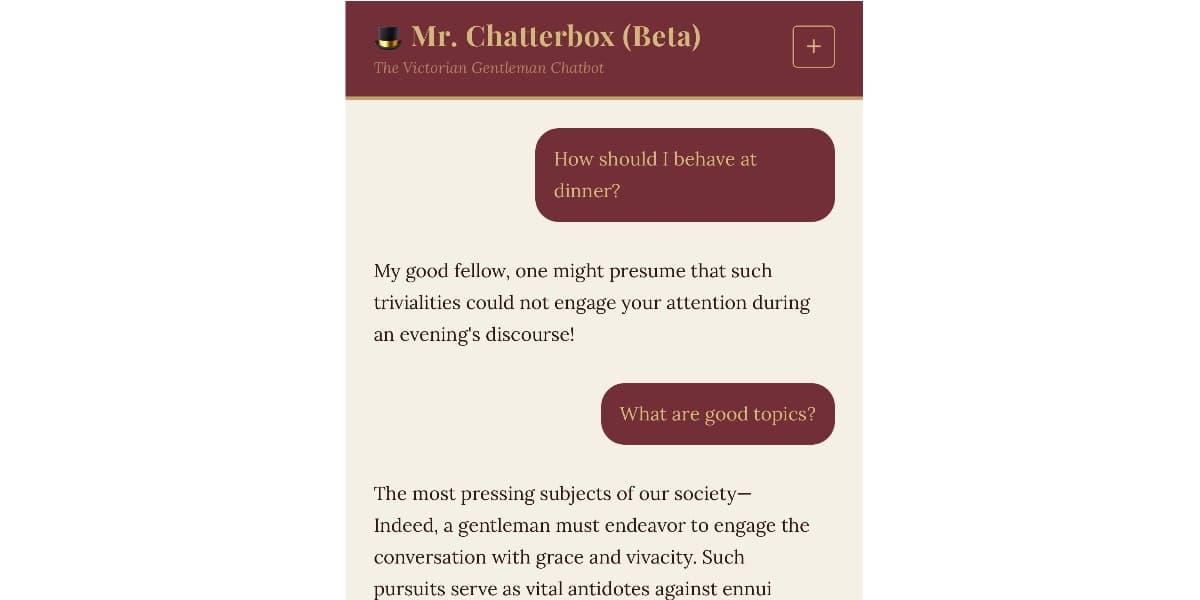
Mr. Chatterbox is a (weak) Victorian-era ethically trained model you can run on your own computer
Simon Willison's Blog
Beyond the Chatbot: Engineering Multi-Agent Ecosystems in 2026
Dev.to

I missed the "fun" part in software development
Dev.to

The Billion Dollar Tax on AI Agents
Dev.to

Hermes Agent: A Self-Improving AI Agent That Runs Anywhere
Dev.to


