
Learning Quantised Structure-Preserving Motion Representations for Dance Fingerprinting
arXiv cs.CV / 4/2/2026
💬 OpinionSignals & Early TrendsIdeas & Deep AnalysisModels & Research
Key Points
- The paper introduces DANCEMATCH, an end-to-end framework for “dance fingerprinting,” enabling retrieval of semantically similar choreographies directly from raw video.
- It addresses limitations of prior pose-sequence retrieval methods by replacing continuous embeddings with compact, discrete motion signatures that capture spatio-temporal structure and support efficient indexing.
- DANCEMATCH combines Skeleton Motion Quantisation (SMQ) with Spatio-Temporal Transformers (STT) to quantise pose data (from Apple CoMotion) into a structured motion vocabulary.
- It proposes a two-stage retrieval pipeline—DANCE RETRIEVAL ENGINE (DRE)—using a histogram-based, sub-linear index followed by re-ranking for more accurate matching.
- The authors release DANCETYPESBENCHMARK, a pose-aligned dataset with quantised motion tokens to support reproducible research, and report strong cross-style retrieval and generalisation to unseen choreographies.
Related Articles

Black Hat Asia
AI Business
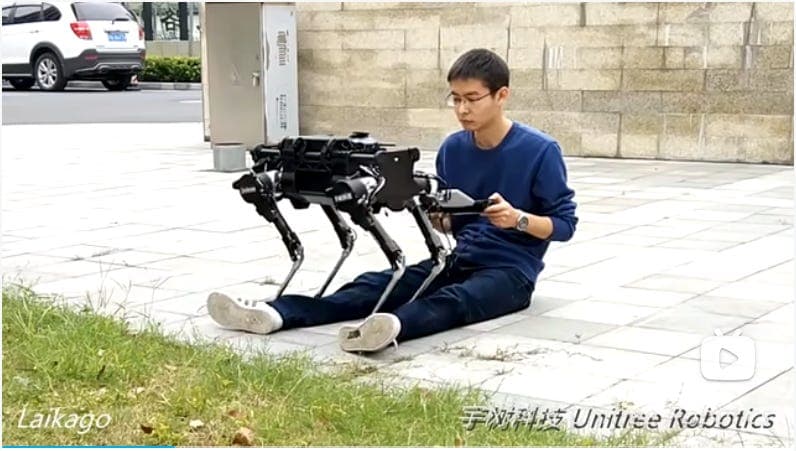
Unitree's IPO
ChinaTalk

Did you know your GIGABYTE laptop has a built-in AI coding assistant? Meet GiMATE Coder 🤖
Dev.to

Benchmarking Batch Deep Reinforcement Learning Algorithms
Dev.to
A bug in Bun may have been the root cause of the Claude Code source code leak.
Reddit r/LocalLLaMA


