
Advancing Multi-Robot Networks via MLLM-Driven Sensing, Communication, and Computation: A Comprehensive Survey
arXiv cs.RO / 4/2/2026
💬 OpinionSignals & Early TrendsIdeas & Deep AnalysisModels & Research
Key Points
- The article is a comprehensive survey of multi-robot networks coordinated by multimodal large language models (MLLMs), focusing on how teams of robots share sensing, communication, and computation under real resource constraints.
- It frames multi-robot coordination as an “intent-to-resource orchestration” problem, where high-level natural-language goals are used to select sensing modalities, allocate bandwidth, and choose where computation runs.
- The survey reviews end-to-end system designs that split reasoning across on-device models and edge/cloud servers, addressing practical limits like network overload when robots transmit rich multimodal data.
- It includes four demonstration scenarios (e.g., digital-twin warehouse navigation, proactive MCS control, FollowMe semantic sensing, and real-hardware open-vocabulary trash sorting) and evaluates approaches using system-level metrics such as payload, latency, and success.
- The key takeaway is that jointly optimizing sensing, communication, and computation via MLLM-guided orchestration can outperform purely on-device baselines in task performance.
Related Articles

Black Hat Asia
AI Business
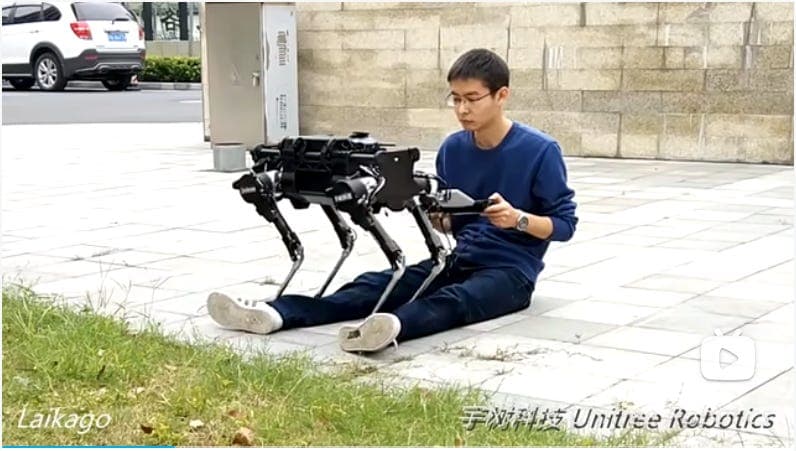
Unitree's IPO
ChinaTalk

Did you know your GIGABYTE laptop has a built-in AI coding assistant? Meet GiMATE Coder 🤖
Dev.to

Benchmarking Batch Deep Reinforcement Learning Algorithms
Dev.to
A bug in Bun may have been the root cause of the Claude Code source code leak.
Reddit r/LocalLLaMA


