
SPLIT: Separating Physical-Contact via Latent Arithmetic in Image-Based Tactile Sensors
arXiv cs.RO / 4/28/2026
📰 NewsDeveloper Stack & InfrastructureModels & Research
Key Points
- The paper introduces SPLIT, a new method for simulating image-based tactile sensors (focused on the DIGIT sensor) to reduce the data burden of real robotic tactile interaction.
- SPLIT uses latent space arithmetic to disentangle contact geometry from sensor-specific optical properties, enabling adaptation to different DIGIT units and transfer to other sensors (e.g., GelSight R1.5) without full retraining.
- The approach reports faster inference than existing alternatives and includes a calibrated finite element method (FEM) soft-body mesh simulator with variable resolution to balance speed and fidelity.
- SPLIT supports bidirectional simulation, enabling both realistic image generation from deformation meshes and reconstruction of deformation meshes from tactile images.
- By combining transferable latent disentanglement, speed improvements, and bidirectional simulation, the authors position SPLIT as a practical tool for accelerating robotic tactile sensing research.
Related Articles

I Build Systems, Flip Land, and Drop Trap Music — Meet Tyler Moncrieff aka Father Dust
Dev.to
Whatsapp AI booking system in one prompt in 5 minutes
Dev.to
v0.22.1
Ollama Releases
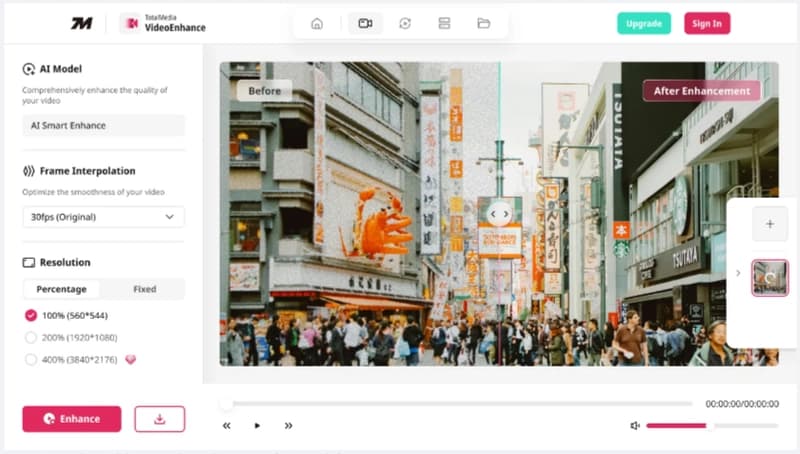
Launching TotalMedia: A Simpler Way to Fix and Convert Video Files
Dev.to

The best of Cloud Next '26: Gemini Enterprise Agent Platform. The perfect combination of Intelligence and Automation to generate VALUE.
Dev.to


