
ITAS: A Multi-Agent Architecture for LLM-Based Intelligent Tutoring
arXiv cs.AI / 4/29/2026
📰 NewsDeveloper Stack & InfrastructureSignals & Early TrendsIndustry & Market MovesModels & Research
Key Points
- The paper introduces ITAS (Intelligent Teaching Assistant System), a multi-agent architecture designed to make LLM-based tutoring deployable in real courses rather than just in notebooks.
- ITAS uses a three-layer design: a teaching layer with parallel specialist agents (Video, Code, Guidance) plus a synthesizer and a separate autograder that checks both answer correctness and the approach to checkpoint submissions.
- The operational layer is implemented as four Cloud Run microservices with session state in Cloud SQL and event streaming via Pub/Sub into BigQuery for traceable course execution data.
- A feedback layer provides a narrow-scope conversational agent that answers instructor questions using per-lesson pseudonymized event streams to address the “Blind Instructor Problem,” where instructors cannot access all student-related tutor data.
- A semester pilot at Old Dominion University (five students) provides system-behavior evidence: the teaching layer produced 334 chat turns without task-boundary hallucinations, 10,628 operational events were captured across five modules, and the instructor received actionable mid-semester insights, though results are not claimed to generalize.
Related Articles

Black Hat USA
AI Business
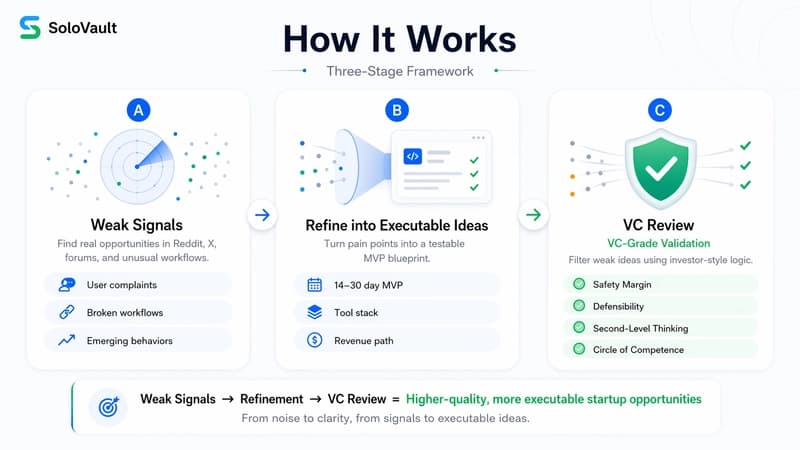
What to Build Still Beats How
Dev.to

I Build Systems, Flip Land, and Drop Trap Music — Meet Tyler Moncrieff aka Father Dust
Dev.to
From Claim Denials to Smart Decisions: My Experience Using AI in Healthcare Claims Processing
Dev.to
Whatsapp AI booking system in one prompt in 5 minutes
Dev.to


