
MAESIL: Masked Autoencoder for Enhanced Self-supervised Medical Image Learning
arXiv cs.CV / 4/2/2026
📰 NewsSignals & Early TrendsIdeas & Deep AnalysisModels & Research
Key Points
- The paper introduces MAESIL, a new self-supervised learning framework for 3D medical imaging (especially CT) that targets the lack of labeled data.
- It argues that common SSL approaches degrade 3D structural learning by treating CT volumes as independent 2D slices, discarding axial coherence and spatial context.
- MAESIL’s key contribution is the “superpatch,” a 3D chunk-based input unit that aims to preserve 3D context while keeping computation manageable.
- The method uses a 3D masked autoencoder with a dual-masking strategy to learn richer spatial representations from unlabeled scans.
- Experiments on three large public CT datasets show MAESIL improves reconstruction quality (e.g., PSNR and SSIM) over baselines like AE, VAE, and VQ-VAE, positioning it as a practical pre-training option for downstream 3D tasks.
Related Articles

Black Hat Asia
AI Business
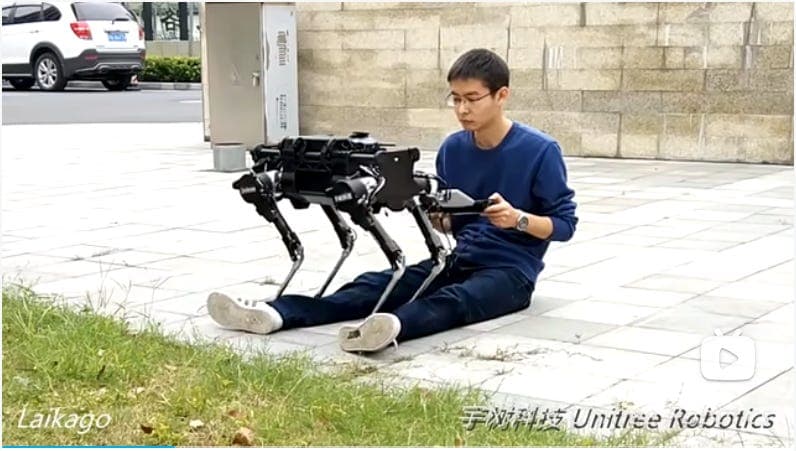
Unitree's IPO
ChinaTalk

Did you know your GIGABYTE laptop has a built-in AI coding assistant? Meet GiMATE Coder 🤖
Dev.to

Benchmarking Batch Deep Reinforcement Learning Algorithms
Dev.to
A bug in Bun may have been the root cause of the Claude Code source code leak.
Reddit r/LocalLLaMA


