
Infinite-Horizon Ergodic Control via Kernel Mean Embeddings
arXiv cs.RO / 4/2/2026
💬 OpinionSignals & Early TrendsIdeas & Deep AnalysisModels & Research
Key Points
- The paper proposes an infinite-horizon ergodic controller for long-duration coverage on general domains using kernel mean embeddings.
- It addresses prior kernel-based ergodic control limitations by resolving intractable computational scaling that previously restricted methods to sub-ergodic, finite-time horizons.
- The key technical contribution is an “extended” kernel mean embedding error visitation state that recursively records state visitation, enabling control synthesis to work in infinite-time settings.
- It also introduces a receding-horizon variant that still leverages the extended error state, aiming to retain the benefits of the infinite-horizon formulation.
- The authors provide theoretical asymptotic convergence results and demonstrate that ergodic coverage guarantees are preserved for certain 2D and 3D coverage problems.
Related Articles

Black Hat Asia
AI Business
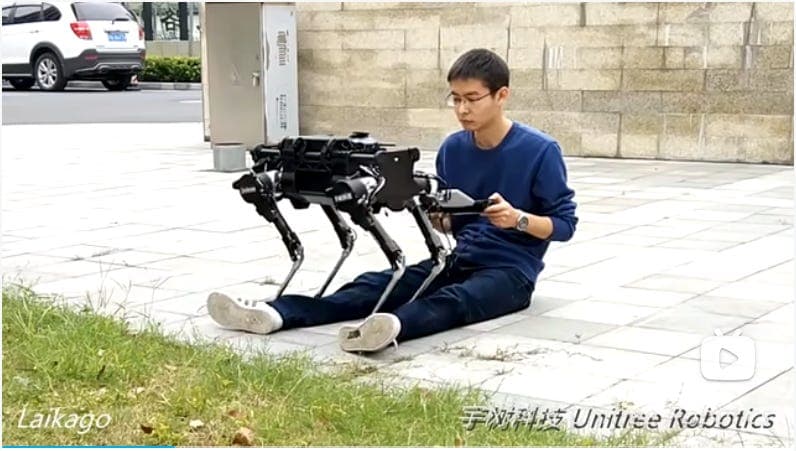
Unitree's IPO
ChinaTalk

Did you know your GIGABYTE laptop has a built-in AI coding assistant? Meet GiMATE Coder 🤖
Dev.to

Benchmarking Batch Deep Reinforcement Learning Algorithms
Dev.to
A bug in Bun may have been the root cause of the Claude Code source code leak.
Reddit r/LocalLLaMA


