
SOFTMAP: Sim2Real Soft Robot Forward Modeling via Topological Mesh Alignment and Physics Prior
arXiv cs.RO / 3/23/2026
📰 NewsTools & Practical UsageModels & Research
Key Points
- SOFTMAP is a sim-to-real learning framework that enables real-time 3D forward modeling of tendon-actuated soft finger manipulators.
- It combines ARAP-based topological alignment to project simulated and real point clouds into a shared, topologically consistent vertex space.
- The method uses a lightweight MLP forward model trained on simulation data to map servo commands to full 3D finger geometry, augmented by a residual correction network trained on a small set of real observations to predict per-vertex displacements.
- A closed-form linear actuation calibration layer enables real-time inference at 30 FPS and achieves state-of-the-art accuracy (Chamfer distance 0.389 mm in simulation, 3.786 mm on hardware) with a 36.5% improvement in teleoperation task success over baselines.
Related Articles

Interactive Web Visualization of GPT-2
Reddit r/artificial
[R] Causal self-attention as a probabilistic model over embeddings
Reddit r/MachineLearning
The 5 software development trends that actually matter in 2026 (and what they mean for your startup)
Dev.to
InVideo AI Review: Fast Finished
Dev.to
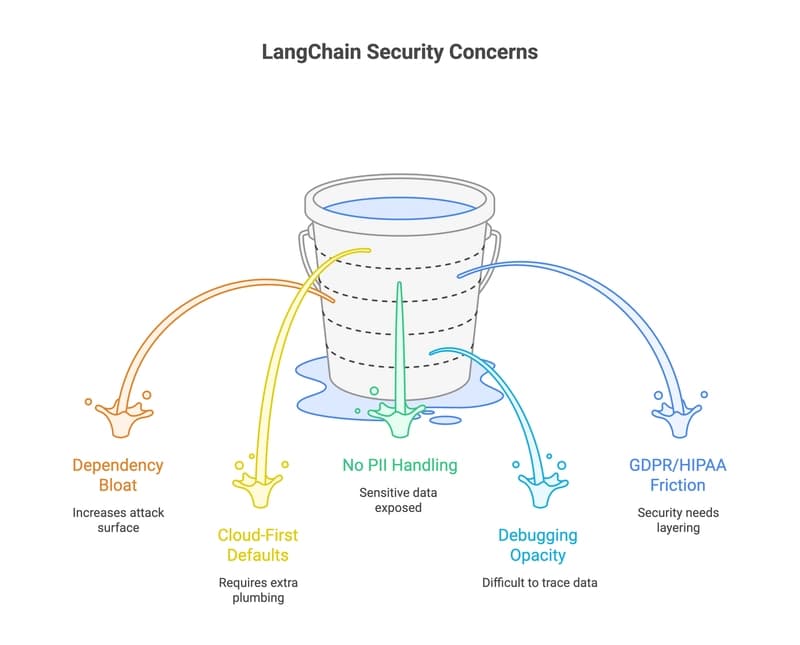
33 LangChain Alternatives That Won't Leak Your Data (2026 Guide)
Dev.to


