
Emergent Neural Automaton Policies: Learning Symbolic Structure from Visuomotor Trajectories
arXiv cs.RO / 3/30/2026
💬 OpinionSignals & Early TrendsIdeas & Deep AnalysisModels & Research
Key Points
- The paper introduces ENAP (Emergent Neural Automaton Policy) to improve long-horizon robot learning by combining an interpretable discrete planner with continuous control.
- ENAP infers a Mealy state machine from visuomotor demonstrations using adaptive clustering plus an L* algorithm extension, capturing latent task modes without needing task-specific labels.
- The learned discrete transitions then condition a low-level reactive residual network that learns continuous actions via behavior cloning (BC).
- Experiments on complex manipulation and other long-horizon tasks show ENAP outperforms state-of-the-art end-to-end VLA policies by up to 27% in low-data settings and provides an explicit structured representation of robotic intent.
Related Articles

Black Hat Asia
AI Business
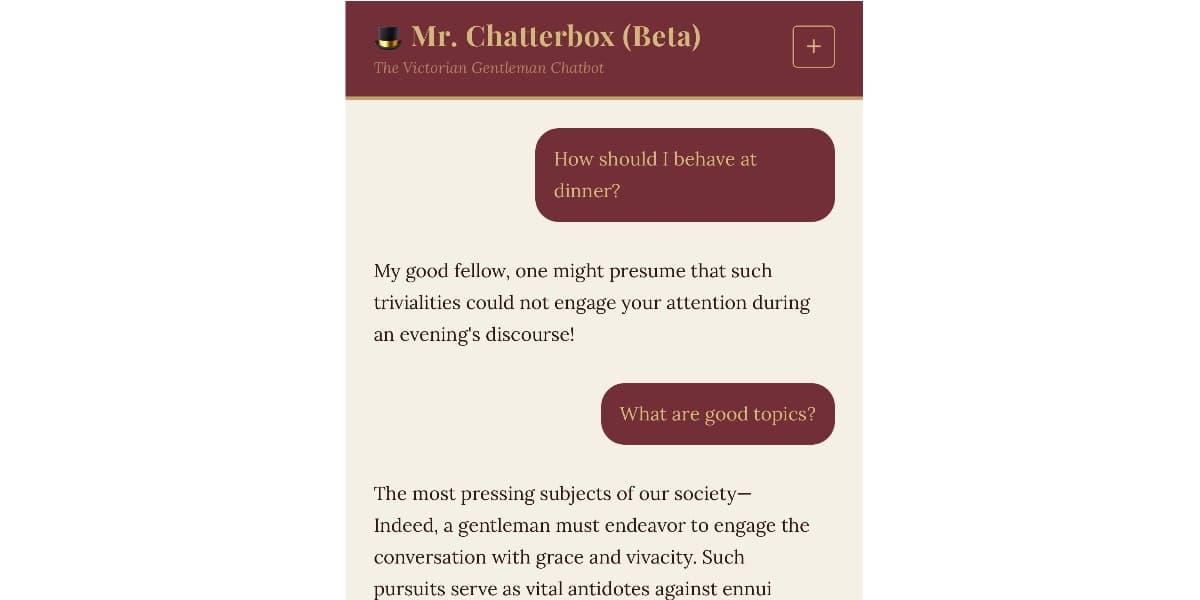
Mr. Chatterbox is a (weak) Victorian-era ethically trained model you can run on your own computer
Simon Willison's Blog
Beyond the Chatbot: Engineering Multi-Agent Ecosystems in 2026
Dev.to

I missed the "fun" part in software development
Dev.to
The Billion Dollar Tax on AI Agents
Dev.to


