
Structured Security Auditing and Robustness Enhancement for Untrusted Agent Skills
arXiv cs.AI / 4/29/2026
💬 OpinionDeveloper Stack & InfrastructureIdeas & Deep AnalysisModels & Research
Key Points
- The paper proposes upgrading agent-skill security auditing from single-prompt filtering to cross-file reviews by packaging skills as structured SKILL.md-based capability units.
- It argues that existing guardrails may inconsistently recover malicious intent under semantics-preserving rewrites, motivating a more robust auditing method.
- The authors formulate pre-load auditing for untrusted Agent Skills as a robust three-way classification problem and introduce SkillGuard-Robust.
- SkillGuard-Robust uses role-aware evidence extraction, selective semantic verification, and consistency-preserving adjudication to improve detection and decision stability.
- Across multiple evaluation views on SkillGuardBench and ecosystem extensions (254–404 packages), SkillGuard-Robust achieves very high exact-match performance and malicious-risk recall, while noting that harsher external-source transfer is still challenging.
Related Articles
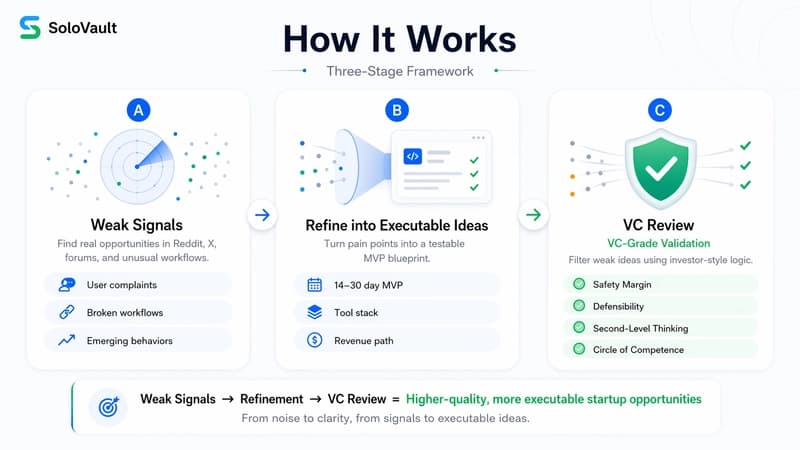
What to Build Still Beats How
Dev.to

I Build Systems, Flip Land, and Drop Trap Music — Meet Tyler Moncrieff aka Father Dust
Dev.to
From Claim Denials to Smart Decisions: My Experience Using AI in Healthcare Claims Processing
Dev.to
Whatsapp AI booking system in one prompt in 5 minutes
Dev.to
v0.22.1
Ollama Releases


