
Where Did It Go Wrong? Capability-Oriented Failure Attribution for Vision-and-Language Navigation Agents
arXiv cs.AI / 4/29/2026
💬 OpinionDeveloper Stack & InfrastructureIdeas & Deep AnalysisModels & Research
Key Points
- Vision-Language Navigation (VLN) embodied agents use multiple interdependent capabilities, so existing system-level testing struggles to explain which specific capability caused a failure.
- The paper proposes a capability-oriented testing method that detects failures and attributes them to particular capabilities using adaptive test generation, capability-specific “oracles,” and a feedback loop.
- Adaptive test cases are generated by selecting seeds and applying mutations to better explore failure modes rather than relying on static evaluations.
- Experiments indicate the approach finds more failure cases and more precisely identifies capability-level weaknesses than prior baselines.
- The resulting failure attribution is intended to be more interpretable and actionable for improving embodied agents in safety-critical settings.
Related Articles
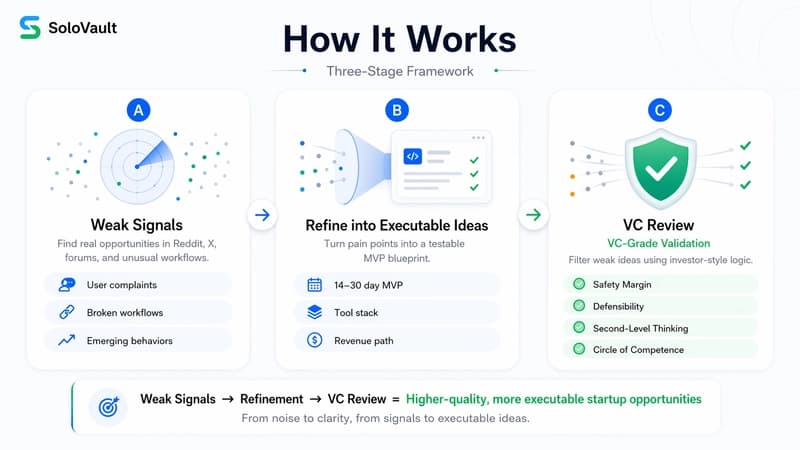
What to Build Still Beats How
Dev.to

I Build Systems, Flip Land, and Drop Trap Music — Meet Tyler Moncrieff aka Father Dust
Dev.to
From Claim Denials to Smart Decisions: My Experience Using AI in Healthcare Claims Processing
Dev.to
Whatsapp AI booking system in one prompt in 5 minutes
Dev.to
v0.22.1
Ollama Releases


