
ARTA: Adaptive Mixed-Resolution Token Allocation for Efficient Dense Feature Extraction
arXiv cs.AI / 3/30/2026
💬 OpinionIdeas & Deep AnalysisModels & Research
Key Points
- ARTA (Adaptive Mixed-Resolution Token Allocation) is a coarse-to-fine vision transformer that begins with low-resolution tokens and selectively allocates additional fine tokens to image regions that need higher detail.
- A lightweight allocator predicts semantic boundary scores iteratively, adding fine tokens only where boundary evidence is sufficiently strong, which concentrates compute near class boundaries and reduces redundant processing in homogeneous areas.
- Mixed-resolution attention lets coarse and fine tokens interact so the model focuses computation on semantically complex regions while preserving sensitivity to weak boundary cues.
- Experiments report state-of-the-art performance on ADE20K and COCO-Stuff with substantially fewer FLOPs, and competitive results on Cityscapes at markedly lower compute (e.g., ARTA-Base at 54.6 mIoU on ADE20K in the ~100M-parameter range).
- The method is designed to improve semantic consistency by encouraging tokens to represent a single class rather than mixing semantics across boundaries.
Related Articles
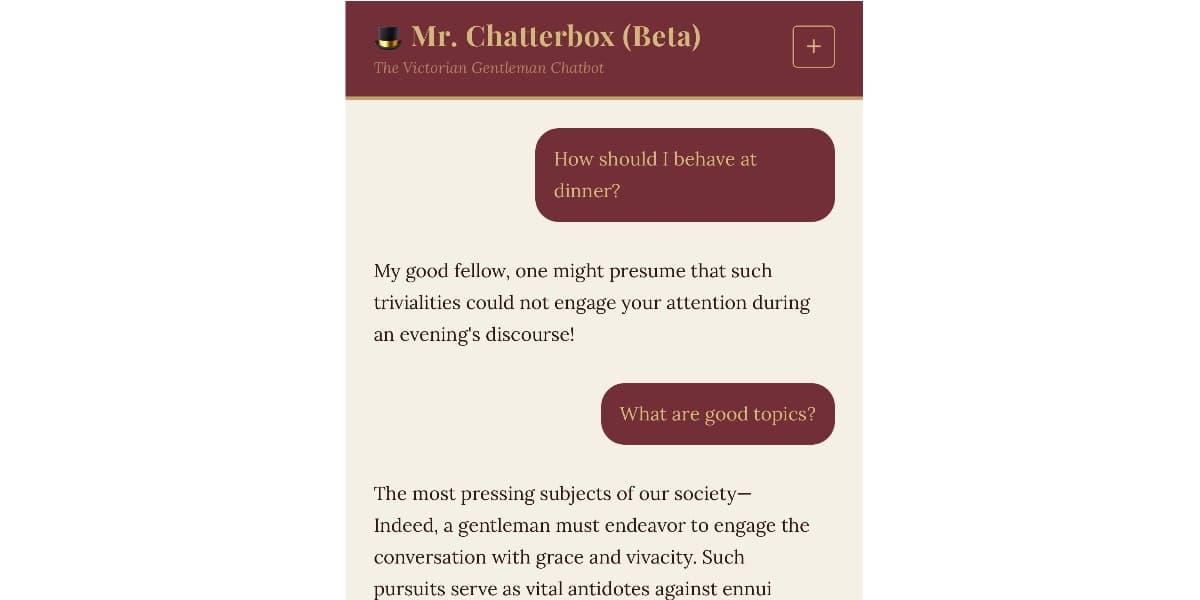
Mr. Chatterbox is a (weak) Victorian-era ethically trained model you can run on your own computer
Simon Willison's Blog
Beyond the Chatbot: Engineering Multi-Agent Ecosystems in 2026
Dev.to

I missed the "fun" part in software development
Dev.to

The Billion Dollar Tax on AI Agents
Dev.to

Hermes Agent: A Self-Improving AI Agent That Runs Anywhere
Dev.to


